Low-Shedding Dog Breeds in Australia
If you're after a dog that leaves less fur on the couch, you're not alone. Shedding is one of the first things Australian families ask about before bringing a puppy home, especially in smaller apartments or households with allergy sufferers. The good news is there are several breeds known for low-shedding coats, and a few of them are among the puppies most requested here at Amey's Puppies.
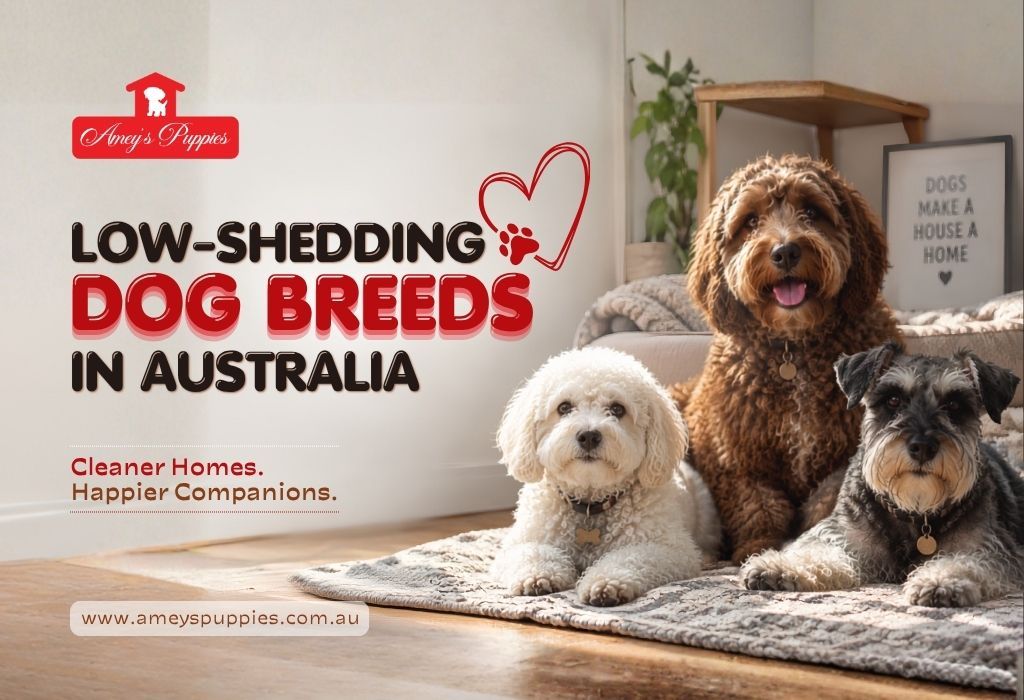
Quick Answer: Best Low-Shedding Dog Breeds
Cavoodle, Groodle and Spoodle are three well-suited low-shedding options for Australian homes. All three are poodle crosses, which means they've inherited a curlier, low-shedding coat that suits families, first-time owners and people who'd rather not vacuum every day.
Do Low-Shedding Dogs Exist?
Technically, no. Every dog sheds to some degree. What changes from breed to breed is how much hair ends up on your floor and how noticeable it is. Breeds with a curlier or wavy coat, like poodle crosses, tend to hold onto loose hair rather than dropping it around the house, which is why they're often labelled "low-shedding" rather than "non-shedding". Coat type, genetics and general health all play a part in how much a dog sheds.
Low-Shedding vs Hypoallergenic: What's the Difference?
It's easy to assume a dog that doesn't shed much is automatically safe for allergy sufferers, but that's not quite right. According to the Cleveland Clinic, most pet allergies are actually a reaction to proteins in a dog's dander, saliva and urine, not the fur itself. A low-shedding coat can help because it carries less loose hair (and the dander that clings to it) around the home, but no breed is completely allergen-free. If allergies are a serious concern for your household, it's worth spending time with the breed first and speaking with your GP or allergist.
Best Low-Shedding Dog Breeds for Australian Homes
Australia's climate and living spaces call for breeds that handle heat, shed minimally, and adapt to smaller yards. The right coat type makes daily life easier. Here's a look at breeds that suit Australian homes well.
Cavoodle: a low-shedding family favourite
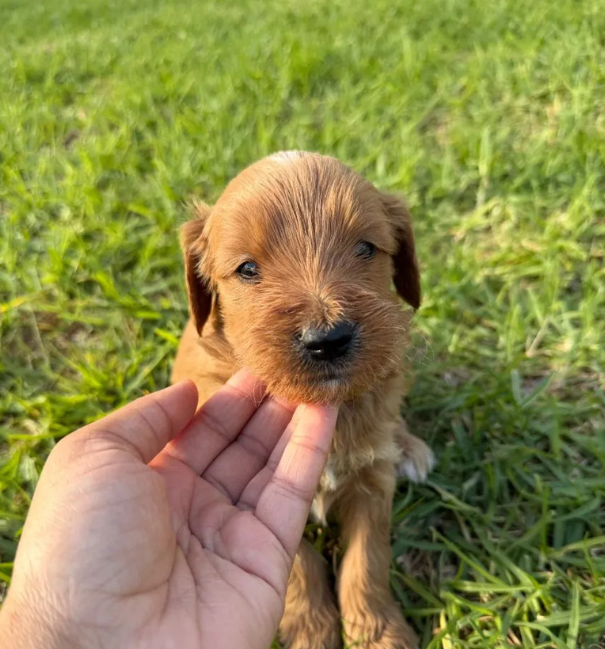
The Cavoodle is a Cavalier King Charles Spaniel and Poodle cross, and it's a widely kept family dog in Australia. Their soft, low-shedding coat combined with a friendly, affectionate nature makes them a natural fit for households with kids or first-time dog owners.
The Poodle side of the cross is what drives the low-shedding trait. Poodle coats grow continuously rather than cycling through shedding seasons like most breeds, so loose hair gets trapped in the curl instead of falling out around the house. Cavoodles inherit a version of this coat, usually wavy to curly depending on which parent's genes come through stronger.
That said, coat quality varies a fair bit within the breed. First-generation Cavoodles (a straight Cavalier x Poodle cross) can end up with looser, slightly shedding coats if they take more after the Cavalier side, while multigenerational Cavoodles bred back toward Poodle tend to have curlier, more consistently low-shedding coats.
Regular brushing (two to three times a week) and clipping every six to eight weeks keeps the coat from matting and shedding gets kept to a minimum even in the higher-maintenance coat types.
Groodle: low-shedding with a gentle temperament
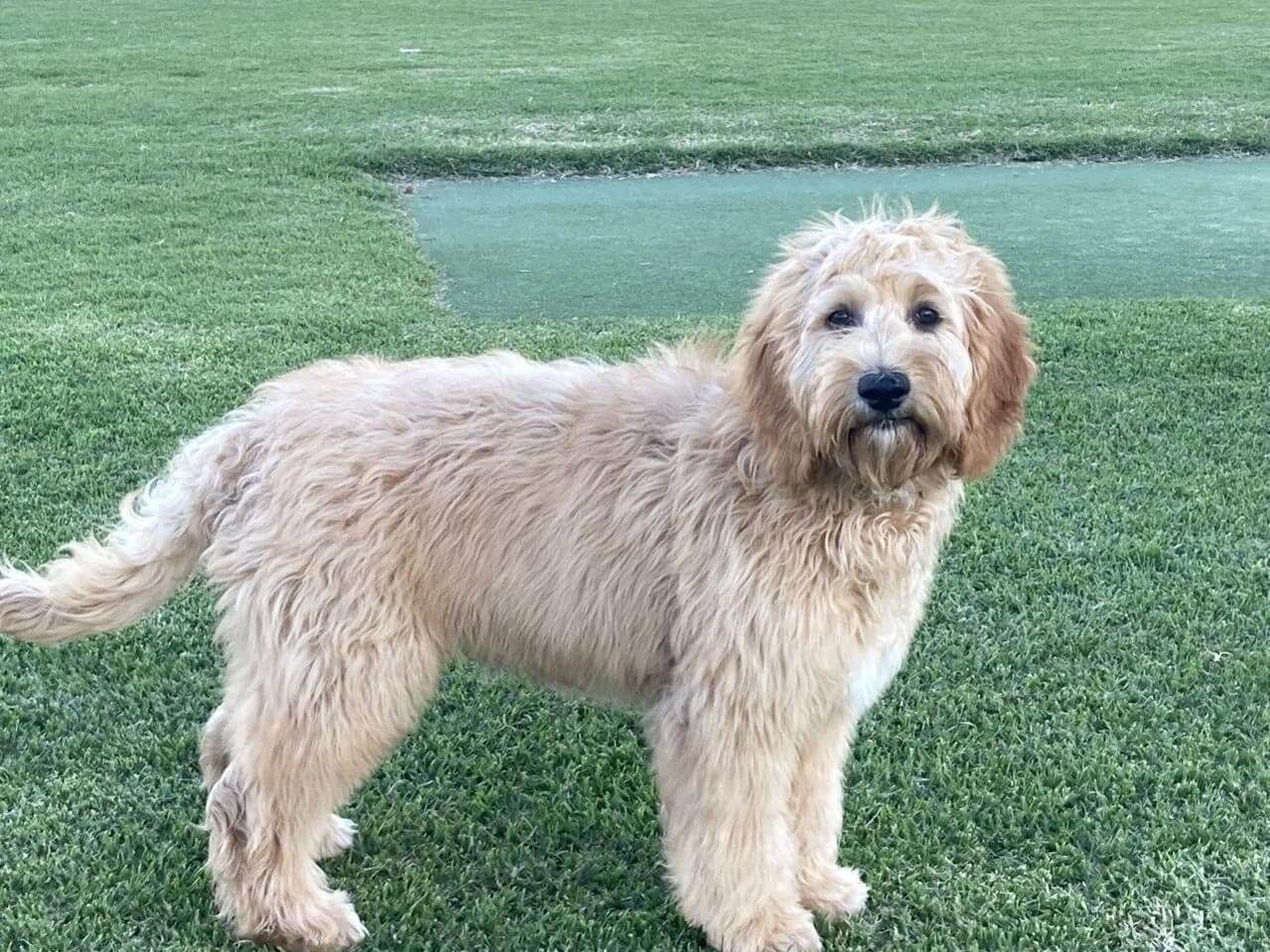
The Groodle (Golden Retriever x Poodle) brings together the Retriever's easygoing personality with the Poodle's low-shedding coat. They're intelligent, trainable and tend to get along well with other pets, making them a solid choice for active families.
Like the Cavoodle, the Groodle's low-shedding trait comes from the Poodle parent. Poodle hair grows in a continuous cycle rather than shedding seasonally, and that trait carries through to varying degrees in the cross. Golden Retrievers, by contrast, are heavy seasonal shedders with a double coat built for cold climates, so the ratio of Poodle to Retriever genetics plays a big role in how much a Groodle actually sheds.
First-generation Groodles (a straight Golden x Poodle cross) often land somewhere in the middle, with a wavy coat that sheds lightly compared to a purebred Golden. Multigenerational Groodles bred back toward Poodle tend to have curlier coats and shed less overall.
Brushing two to three times a week and a trim every six to eight weeks helps manage loose hair and prevents matting, especially in warmer Australian climates where a heavier coat can also affect heat tolerance.
Spoodle: compact, low-shedding and easygoing
The Spoodle (Cocker Spaniel x Poodle) is a smaller, low-shedding option for those after a compact companion. They're affectionate, adaptable and well suited to apartment living, provided they get regular exercise and mental stimulation.
The Poodle parent is again behind the low-shedding trait, contributing a coat that grows continuously instead of cycling through a seasonal shed. Cocker Spaniels carry a silky, moderate-shedding coat of their own, so a Spoodle's actual shedding level depends on how the genetics split.
First-generation Spoodles (a straight Cocker x Poodle cross) tend to have a looser, wavy coat with a small amount of shedding, while multigenerational Spoodles bred back toward Poodle usually end up curlier and shed even less. Coat texture can also vary depending on which Cocker Spaniel line is used, since American and English Cocker coats differ slightly in density.
Regular brushing two to three times a week and a clip every six to eight weeks keeps the coat manageable and shedding to a minimum, particularly through Australia's warmer months when a thicker coat can add to heat stress.
Choosing a Low-Shedding Breed by Lifestyle
Choosing a breed depends on your apartment living, allergy sensitivities, and grooming time. Here's how to match a breed to your specific lifestyle.
Best for apartments and small spaces
If space is limited, the Spoodle's smaller size and manageable coat make it a practical option. Regular walks and some indoor play will keep them content in a smaller footprint.
Best for families and active households
Families with more room to move, or an active lifestyle, tend to do well with a Cavoodle or Groodle. Both breeds enjoy being part of the action and adapt easily to family routines.
Grooming and Coat Care for Low-Shedding Dogs
Low-shedding coats still need regular upkeep to stay healthy and mat-free. The right grooming routine depends on coat type, length, and how much time you can commit each week. Here's what to prioritize:
Brushing frequency and professional grooming
Low-shedding doesn't mean low-maintenance. Poodle-cross coats need regular brushing, generally two to three times a week, to prevent matting, along with a professional groom every six to eight weeks depending on coat length.
Keeping allergens down at home
Regular grooming, bathing and vacuuming all help reduce the dander that builds up in carpets and furniture. Keeping your dog off soft furnishings can also make a noticeable difference for allergy-prone households.
Finding a Low-Shedding Puppy from a Reputable Breeder
What matters the most in finding a low-shedding puppy is finding a reputable and trusted ethical puppy breeder. Health testing, clean facilities, and honest communication separate reputable breeders from the rest. Here's what to look for before you commit:
Coat quality and shedding levels are influenced by genetics, so choosing a puppy from a licensed, ethical breeder gives you a much clearer picture of what to expect. At Amey's Puppies, every litter is raised under our health guarantee and in line with Victoria's Domestic Animal Business standards.
Final Thoughts
Low-shedding doesn't mean any grooming, but for many Australian households it makes day-to-day life a lot easier, less fur on the floor, less vacuuming, and a coat that's simpler to manage. The Cavoodle, Groodle and Spoodle are three low-shedding breeds worth considering, and all three are raised right here at Amey's Puppies under our health guarantee and ethical breeding standards.